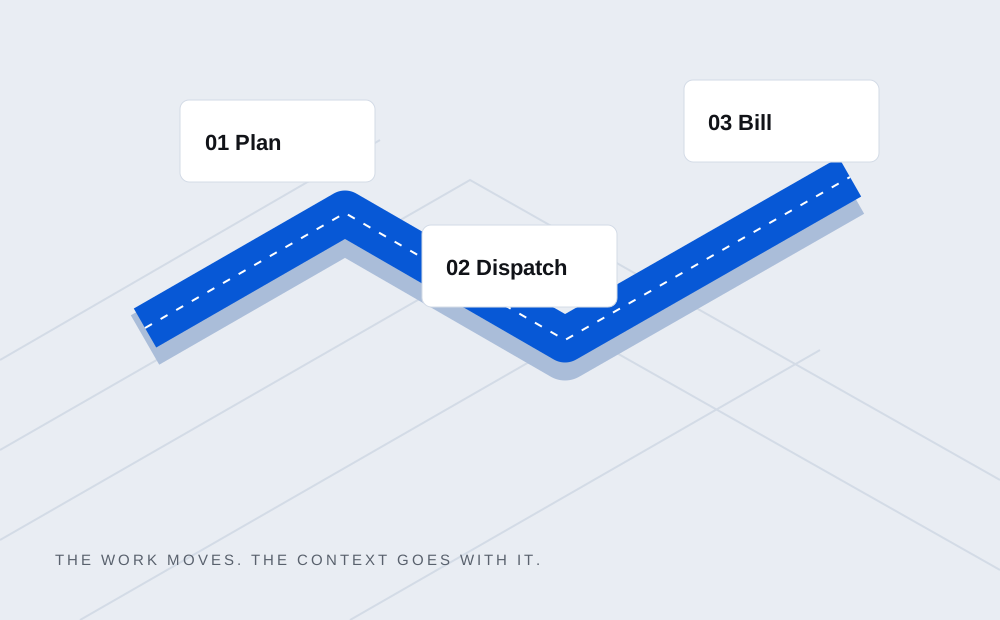
The work around a load rarely belongs to one person. A dispatcher confirms the pickup. Someone else checks a carrier document. Another person prepares the invoice after delivery.
Each handoff is a moment when context can travel with the work, or stay behind in a message thread.
Start with the next decision
A useful load record should answer a few immediate questions. What is happening next? Who owns that action? Which detail could stop it from happening?
An appointment needs its facility time zone. A truck needs a current assignment. A rate confirmation needs a person to review its terms. Those details make the difference between a record that describes the work and one that helps someone do it.
Keep the truck at the center of capacity
A driver and a truck are related, but they are not the same record. Drivers change assignments. Trailers move between power units. A capacity view should make those relationships clear.
Start with the truck, then show its driver, trailer, availability and location context. A reported location should also show when it was last updated. A place without a timestamp can leave the next dispatcher guessing.
Let documents follow the load
A rate confirmation belongs with the commercial details it describes. A proof of delivery belongs with the completed work it supports. Keeping both connected to the load gives the person preparing an invoice a clearer starting point.
Extraction can help prepare details for review. It should leave the team with a visible proposal to check against the original document before anything is applied.
Make the financial handoff deliberate
Delivery, invoicing and payroll are connected steps, each with its own review. A completed load may still need a checked POD before it is ready to bill. An invoice draft still needs review before issue. A payroll run needs approval before it is marked paid.
These transitions deserve clear states. That makes it easier to answer what is ready, what is waiting and who should act next.
The people handling those steps also need different access. A dispatcher needs the operational facts. Agency fees and margins belong in authorized financial views.
A simple handoff checklist
Before passing a load to the next person, check that:
- The next stop and its appointment time zone are clear.
- The assigned truck, driver and trailer are represented separately.
- The latest note describes an action someone can take.
- Supporting documents are attached to the right record.
- The next review or approval has an owner.
A clear handoff saves the next person from searching messages or asking for the same details again. Keep the record current so they can pick up the work.